
11 Wedding Weekend Planning Tasks Couples Underestimate
You have a spreadsheet. Maybe two. The venue is booked, the timeline is color-coded, and you have a system. You are organized. That’s not the issue.
The issue is that no amount of tabs or columns can replace knowing the industry.
Which vendors actually deliver. Which hotel looks great on paper and is a nightmare for a room block. Which cross-town route is a disaster on a Saturday night.
That’s not something you can spreadsheet your way into. It comes from the reps, the relationships, and having done this enough times to know what you don’t know.
Because underneath the ceremony, the reception, the florals, the seating chart.
There’s a whole second project most couples don’t see coming. Transportation across three venues. Out-of-towners to feed on Friday night. Aunt Carol and the shuttle situation.
Wedding weekend planning has a way of quietly becoming a full-time job, and it usually happens right around the time you thought you were almost done.
What Wedding Weekend Planning Actually Involves
When people hear “wedding weekend,” they often picture three simple events: a welcome party, the wedding day, and a farewell brunch.
In reality, it’s a lot more layered than that.
There isn’t just one timeline for a wedding weekend. There are timelines on timelines. Transportation schedules between hotels and venues. Vendor load-in windows. Catering deliveries. Guest arrivals. Event setup and breakdown across multiple locations.
Every event has its own moving parts, and those pieces all need to connect smoothly. That’s where wedding weekend logistics come into play.
Here are the tasks that tend to catch couples most off guard.

Photo by Taylor Denton Photography
1. Hotel Room Blocks: The First Wedding Weekend Planning Trap
Hotel room blocks seem simple at first. Then couples realize each hotel has different booking policies, contract deadlines, and attrition clauses. Some require a certain percentage of rooms to be filled by a specific date.
Miss that deadline and the block disappears, leaving guests scrambling for accommodations the week of your wedding, leaving them calling you about it. Knowing which hotels in your area have guest-friendly policies (and which ones look good on a website but are quietly terrible to work with) is the kind of thing that only comes from experience.
2. Guest Transportation Across the Entire Wedding Weekend
Transportation is one of the biggest logistical puzzles in wedding weekend planning. You’re moving guests to the welcome party, the wedding venue, the ceremony, and sometimes the farewell brunch. Across multiple pickup points, shifting guest counts, and varying arrival times.
This single task can easily take 20–25 hours to plan properly. And when it goes wrong, everyone notices immediately.
3. Communicating the Wedding Weekend Itinerary (Without Losing Your Mind)
Guests need to know where to be and when. That sounds simple until you’re hosting four events across three days and trying to explain it all in a way that works for your 72-year-old great uncle and your friend who only reads texts.
A clear wedding weekend itinerary that accounts for different guest groups, different arrival times, and different levels of tech-savviness is genuinely its own project. The couples who nail this are the ones whose guests feel taken care of all weekend without ever having to ask what’s next.
4. Welcome Bag Assembly and Delivery
Welcome bags sound like a charming detail until you’re standing in your living room surrounded by 200 individual honey packets, three different tissue paper colors, and a guest list sorted by hotel wondering how any of this is going to get where it needs to go.
Sourcing local treats, assembling bags, organizing by guest name, and coordinating delivery with multiple hotels (each of which has their own delivery window and drop-off requirements) is a half-day project minimum. It’s worth it. It just takes longer than it looks.
5. Vendor Coordination Across Multiple Wedding Weekend Events
A wedding weekend rarely involves one set of vendors. You might have a caterer for the welcome party, a completely different team for the wedding day, and another vendor for brunch. Each event has its own contracts, timelines, and communication needs.
Keeping everyone aligned, making sure no one shows up to the wrong venue on the wrong day, requires consistent, detailed coordination across the entire weekend.
6. Power Access, Load-In Windows, and Vendor Meals
These are the behind-the-scenes wedding weekend logistics couples never think about until vendors start asking questions they don’t know how to answer.
Where’s the power source for the lighting rig? When can the florist load in? What time do vendors eat, and who’s feeding them during a 12-hour day? These details affect how smoothly everything runs. A vendor who’s been waiting three hours to load in and hasn’t eaten since noon is not operating at their best. Small logistics, real consequences.
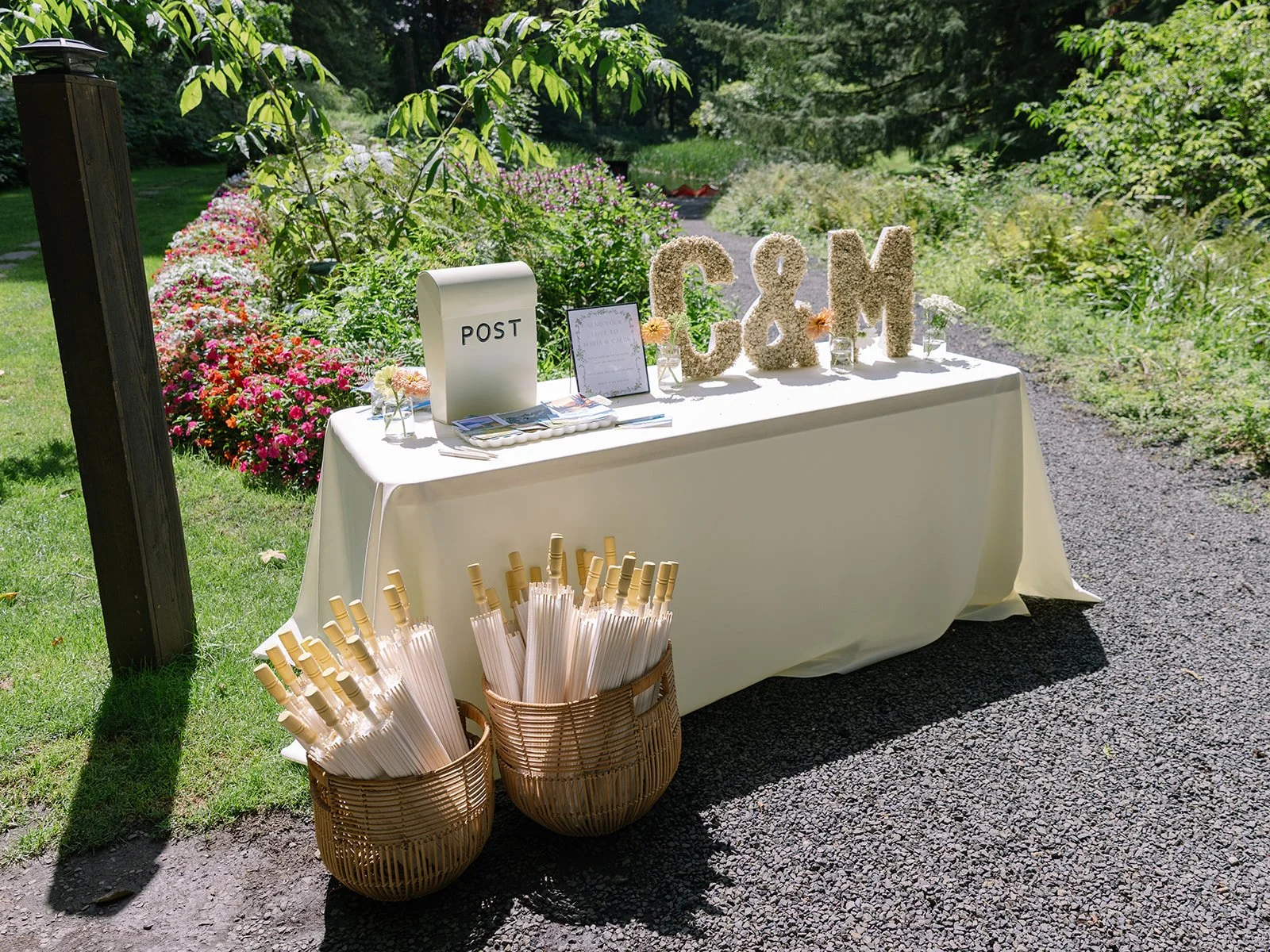
Photo by Elissa Deline Photography
7. Budget Management Across a Full Wedding Weekend
Most couples start with a wedding day budget. Then the welcome party gets added. Then transportation. Then brunch. Then welcome bags. Then the hospitality suite someone suggested and suddenly seemed completely reasonable at 11pm on a Tuesday.
Managing the budget across a full wedding weekend requires constant adjustment so one event doesn’t consume what was supposed to go toward the reception.
Having someone who’s seen these budgets balloon in real time, who knows where to protect versus where to flex, makes a significant difference.
8. Navigating Family Expectations Over Multiple Days
A single wedding day gives family dynamics a limited window to express themselves. A full wedding weekend gives them the whole run of the house.
More time together means more opinions about guest lists, seating, traditions, and schedules. Managing those conversations thoughtfully, before they become the thing you’re dealing with on the morning of your wedding, is part of what good planning actually looks like.
9. Dietary and Menu Coordination Across Every Event
When you’re hosting multiple events, food planning compounds fast. The guest with the severe nut allergy is attending the welcome party, the wedding, and brunch. Their needs need to be communicated to three different catering teams who have never met each other.
Tracking dietary needs across multiple menus and multiple vendors, without anything falling through the cracks, requires the kind of organized follow-through that’s easy to underestimate until someone at your welcome party can’t eat anything.
10. The Gaps: What Are Guests Doing Between Wedding Weekend Events?
Couples focus so much on the events themselves that they forget to think about what happens in between. Guests may have three or four hours between the welcome party wrapping up and needing to be ready for the wedding day. They’re in an unfamiliar city with no plan.
Sharing a short list of restaurant recommendations, neighborhoods worth exploring, or local experiences to check out is a small touch that makes out-of-town guests feel genuinely hosted rather than just invited.
11. RSVP Tracking Across the Whole Wedding Weekend
When guests RSVP, they’re confirming more than the wedding. They might also be responding to the welcome party, brunch, transportation options, and additional activities, each of which needs a separate headcount for separate vendors.
Keeping track of who is attending which events, which guests need shuttle seats, who responded maybe and then went quiet. It turns into a puzzle fast. A puzzle that has real cost implications when you get it wrong.

Photo by Howie Photography
Wedding Weekend Planning Is a Second Job. It Doesn’t Have to Be Yours.
The average wedding takes over 200 hours to plan. Add a full wedding weekend and you’re running a small event company while also trying to enjoy being engaged.
I’ve watched couples spend their entire engagement in logistics mode. Heads down in spreadsheets, chasing vendor confirmations, fielding questions from guests who can’t find the hotel link. By the time the wedding arrives, they’re exhausted before it even starts.
That’s not what this is supposed to feel like.
Full-service planning exists so the logistics live with someone who does this for a living, someone who already knows which hotel won’t lose your room block, which transportation company actually shows up on time, and how to build a wedding weekend itinerary that guests can actually follow. You stay in the part that’s yours: making decisions, celebrating with the people you love, and actually being present for the weekend you’ve been building toward.
Planning a Wedding Weekend That Actually Flows
A well-planned wedding weekend feels effortless to guests. Transportation runs on time. The wedding weekend itinerary is clear. Events flow from one to the next without anyone standing around wondering what’s happening.
Behind the scenes, there’s careful coordination making all of that possible. If you’re starting to realize how many moving parts a full wedding weekend involves: you’re not imagining it. And you don’t have to figure it out alone.
Let’s Talk About Your Weekend
If you’ve read through this list and felt your stomach drop a little, that’s actually a good sign. It means you’re taking the guest experience seriously, and that’s exactly the kind of couple I love working with.
I handle all of this. The room blocks, the transportation logistics, the itinerary, the vendor wrangling, the welcome bags, the dietary spreadsheet nobody wants to maintain. All of it.
So you can focus on the part that actually matters: showing up to your own wedding weekend ready to enjoy every minute of it.
→ Inquire about full-service wedding weekend planning
